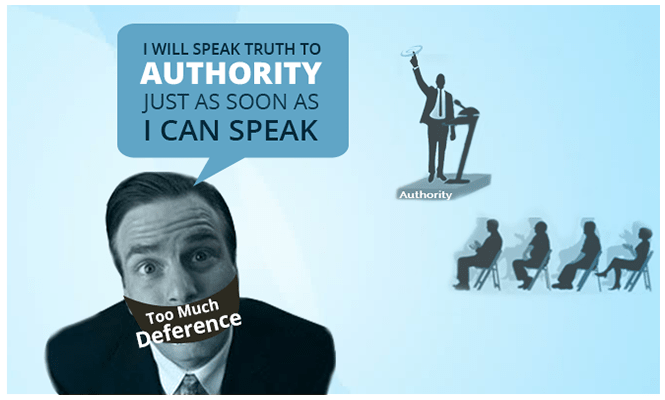
Balancing Authority
- Unplanned expression; ambiguity is a necessary ingredient
- Experts are important, but often wrong
- Specialized knowledge, expertise, can be found in many places
- A necessary counterweight
A penetrating question of the constitutional convention and the debate for ratification was who would be entrusted with the leading executive, legislative, and judicial authority the Constitution contemplated.
Advanced mostly by the Federalists was the idea that all would be well as society’s most virtuous men were sure to hold these positions.
Thomas Jefferson famously rejected a dependence on subjective values like virtue, declaring, roughly, “don’t speak to me of good men; we must bind them down with the Constitution”.
What that meant in practice created tensions – and still does. Obviously, it would be worse than folly to try to anticipate all contingencies in any law; much less a constitutional framework that requires consent and ongoing agreement from disparate and skeptical groups.
That however means having to live with ambiguities; which give rise to anxieties. It also leaves much room for mischief, which feeds the anxiety that in turn feeds an expectation that various leaders will manage these problems for us. Therefore, it’s not surprising that criticism of the constitution is often aimed at its ambiguities and the problems they permit.
On the other hand, succeeding generations using that
same room to maneuver, took actions
perhaps envisaged – but never specified - in our founding documents in their attempts to check, balance, and deal with the mischief.
It seems certain that Jefferson’s “bind them down” comment anticipated, or addressed the issue directly. Not simply a matter of static process, or exacting words on parchment, it is necessary for civil society and an informed citizenry to develop specific tools to meet the needs of changing times and circumstances. Taken at face value, this perhaps is where the essential virtuosity of those founding documents lay.
- Leading men, or authorities, based on their station, could not be depended on and should not be excessively deferred to.
- Ambiguity is a necessary ingredient of free society and cannot be stamped out.
- Room must be left for unplanned expression; the freedom that would permit people to adjust, meet a moment and “bind men down”.
The “leading man” (or leader) argument is an interesting one. Just as the federalists assured us that virtuous men would rise, we are continually sold – and we continually buy – the idea of leader’s managing our affairs and solving our problems. This is a dependency full of fine lines and forked roads; the questions and assumptions it raises are more relevant than ever.
It is in human nature to defer to authority, and appropriate where it has been earned through talent, accomplishment or the amassing of specialized knowledge. For someone without expertise in a particular domain, such deference might be required for survival; like soldiers following orders on a battlefield.
It is also in human nature to buck authority as too much deference can be very unhealthy. Here, the fine lines need definition.
Deferring to the boot maker when the subject is boot making or the commanding officer in the heat of battle is more than sensible. But, when the domain is the quarrelsome, uncertain modeling of human relations - unchecked deference to authority can be and has been disastrous.
Authorities in this domain may hold a powerful or prestigious position, have written a book, possess many degrees and be cited, even promoted, by various media as “experts”, which is fine; but the obtaining of simple “disinterested truth” is a
dicey matter.
https://www.amazon.com/Control-United-States-Steven-Jacobson/dp/1939438160/ref=sr_1_1?ie=UTF8&qid=1520233836&sr=8-1&keywords=Mind+control+in+the+United+States
Entrenchment, conflicts, and livelihoods are as much a part of life for this authority figure as anyone. Perhaps in this domain more than others, the pursuit of unconventional work or any speaking out against
imposed boundaries
http://reelaccurate.com/about/gatekeeping.pdf
can endanger careers.
With travels in the narrow social and professional circles previously defined, and careers guided by those specialized networks, great caution is called for in any too-quick acceptance of judgments coming from such quarters.
This requires
leading opinion be held to a constant, careful scrutiny –
they must be bound down - lest we succumb to an elite, oligarchic technocracy envisioned by many
utopian and
dystopian thinkers. This is the dangerous proposition to trade unruly politics – freedom - for an authoritative promise of certainty delivered through expertise; a value as subjective as virtue.
In this subjective world, the
certain promise of a
perfect truth is obviously silly. Yet, so often “truths” from these spheres are readily believed by people not likely to see themselves as particularly naive or gullible. Others, claiming more discernment, scoff at such sleepy naiveté but,
let it end there - offering or supporting no functional challenge - oblivious that the two positions both lead to inertia and docility.
That this is true is obvious because no one would deny that history is replete with dissenting voices - later proven right – being crushed by promoted authority and its
certainties.
Wrong: why experts keep failing us
https://www.amazon.com/Wrong-us-Scientists-relationship-consultants/dp/0316023787/ref=sr_1_1?s=books&ie=UTF8&qid=1520231874&sr=1-1&keywords=wrong%3A+why+experts
Yet, the credulity problem remains.
And now, with precision media saturation, it is easy to disarm critical facilities by having “leading people” persistently project authoritative certainties. Therefore, we must account for the problem;
with precision.
Here we see the forked roads that must be recognized and navigated:
- Expertise and authority in any domain is important and deserves respect; it must be consulted and a failure to do so is risky.
- At the same time, to allow conventional wisdom and claims of authority and expertise to go unchallenged is much more than risky.
- Examples abound of the mistakes and failures of noted authorities, and the success of the unnoted, and so-called average citizens,
Please see playlist "the need identified"
https://www.weleadusa.org/welead-videos/need-identify-playlist-new.html
Profound question - Where? How?
The Peoples platform - Once again the (capable) people know best
to more clearly see, and directly solve problems. Nonetheless, both represent potential hubs of experience and accomplishment and must be balanced.
- In the absence of such balance, this authority, claiming a corner on the market of expertise and power, will further stratify society and endanger freedom.
This requires that a counterweight be created, an infrastructure of critical facilities; fully of the people. Capable of marshaling its own resources and expertise, thereby creating a check on overconfidence, conflicts of interest and bias, it will assess the findings, pronouncements and policies of authority in pursuit of “what works”.
By doing so a synthesis of interests, methods and people will be enabled as:
- Truths will be liberated that those fearful of their public reputations cannot now freely speak
- A proper forum in which to challenge convention will eliminate timidity for fear of ridicule or denouncement; protection
- Contributors make their argument – and see it through - in an empirical environment
- The counterweight ensures that arrogance must give way; which will serve to de-stratify and de-snob
- Gray areas are studied and options tested in the marketplace of life
- The danger of sweeping change engineered from above is reduced
- Flexibility in implementing change is enabled
- Entrenchment - that prevents changing change that has not proven valid - is disabled
A failure to do any less is to submit to the “order of things” and simply pay deference to plutocracy; everything that is antithetical to the ideals of republican self-government and more importantly, enlightened self-interest.